Resource Persons & Sessions
Meet the resource persons leading the sessions of the IUCAA–RSET Workshop on
“Tackling the Big Data Universe: Signal Processing and Imaging using the MeerKAT Telescope”.
“`
📅 2–4 July 2026
📍 RSET, Kakkanad, Kochi
🔭 MeerKAT Telescope
“`
The workshop brings together expertise in astronomy, radio astronomy, radio instrumentation,
signal processing, aperture synthesis, visibility data, image reconstruction and MeerKAT workflows.
The sessions are arranged to help participants move from the foundations of astronomy to practical
hands-on analysis and student presentations.
🌌
Day 1
Foundations in astronomy, radio astronomy, SKA, antennas, receivers and signal acquisition.
“`
📡
Day 2
Signal processing, MeerKAT/SKA big data challenges, aperture synthesis and visibilities.
🖥️
Day 3
Image reconstruction, team preparation, participant presentations, feedback and discussion.
“`
Resource Persons
Session responsibilities are aligned with the revised day-wise programme.
4 Resource Persons
“`
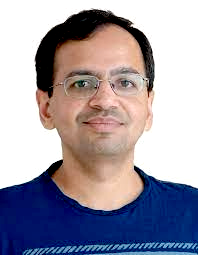
Prof. Neeraj Gupta
Scientist G, Inter-University Centre for Astronomy and Astrophysics (IUCAA), Pune
Prof. Neeraj Gupta will lead the sessions related to SKA, MeerKAT, big data challenges,
aperture synthesis, visibilities, imaging workflows and image reconstruction. His sessions
connect the scientific motivation of modern radio astronomy with practical MeerKAT data workflows.
SKA
MeerKAT
Radio Interferometry
Aperture Synthesis
Visibilities
Imaging Workflow
Sessions / Contributions
- Lecture 2: SKA — Science Goals and Technical Challenges of the World’s Largest Telescope
- Lecture 6: MeerKAT, SKA and Big Data Challenges in Radio Astronomy
- Hands-on Session 2: How do Radio Telescopes “See”? — Aperture Synthesis and Visibilities
- Hands-on Session 3: From Visibilities to Images — Image Reconstruction Techniques
- Participant presentations, discussion, feedback and mentoring
Calibration and imaging workflow will be covered within the hands-on flow.
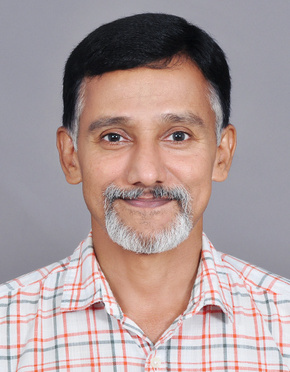
Dr. Joe Jacob
Associate Professor (Retd.), Newman College, Thodupuzha
Dr. Joe Jacob will introduce the basic astronomical concepts required for understanding
radio astronomy and modern telescope observations. His sessions will help beginners connect
astronomical objects, the electromagnetic spectrum, radio waves and important radio signatures.
Astronomy Fundamentals
Radio Astronomy
Electromagnetic Spectrum
Radio Signals
H I Line
Sessions / Contributions
- Lecture 1: Astronomy Fundamentals for Beginners
- Lecture 3: Basics of Radio Astronomy and Radio Signals
- Introduction to stars, galaxies, interstellar medium and radio signatures
- Foundational discussion connecting astronomy with radio telescope observations
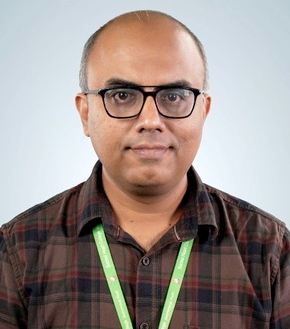
Dr. Mathew George
Assistant Professor, Sacred Heart College, Thevara
Dr. Mathew George will introduce the engineering side of radio astronomy through antennas,
receivers and the signal chain. He will also support the practical antenna demonstration,
signal acquisition and 21 cm H I line demonstration.
Radio Antennas
Receivers
Signal Chain
Instrumentation
21 cm H I Demo
Sessions / Contributions
- Lecture 4: Radio Antennas, Receivers and the Signal Chain
- Hands-on Session 1: Antenna Demonstration, Signal Acquisition and 21 cm H I Line Demo
- Practical explanation of the signal path from antenna to computer
- Mentoring during hands-on and team-based activities
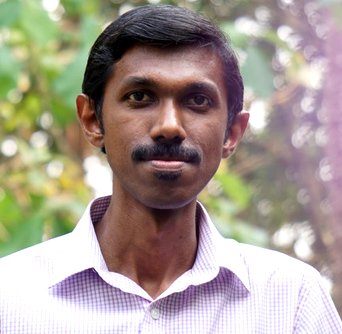
Mr. Sudheesh T. P.
Guest Faculty, Newman College, Thodupuzha
Mr. Sudheesh T. P. will introduce the signal processing concepts that connect radio observations
to usable scientific data products. His session includes sampling, digitization, Fourier transform,
spectrum generation, channelization, filtering, noise reduction and RFI mitigation.
Signal Processing
Sampling
Fourier Transform
RFI Mitigation
Data Quality
Sessions / Contributions
- Lecture 5: Signal Processing in Radio Astronomy
- Hands-on Session 1: Antenna Demonstration, Signal Acquisition and 21 cm H I Line Demo
- Radio data viewing, spectrum and noise feature demonstration
- Mentoring during practical sessions and team-based exploration
“`
Workshop Mentoring and Interaction
Along with individual sessions, the resource persons will support guided hands-on activities,
Day 3 team preparation, participant presentations, feedback and discussions on possible student
projects and future opportunities in radio astronomy, signal processing, imaging and scientific computing.